Do the items have a cooldown?
The official description does not publish cooldowns or use counts. This page does not invent them. The practical advice is to treat each item as a limited resource and use it when it can change a decision.
Item reference
Three disruption tools, three different jobs. This page is the reference; the guide covers when to press the button.
Updated
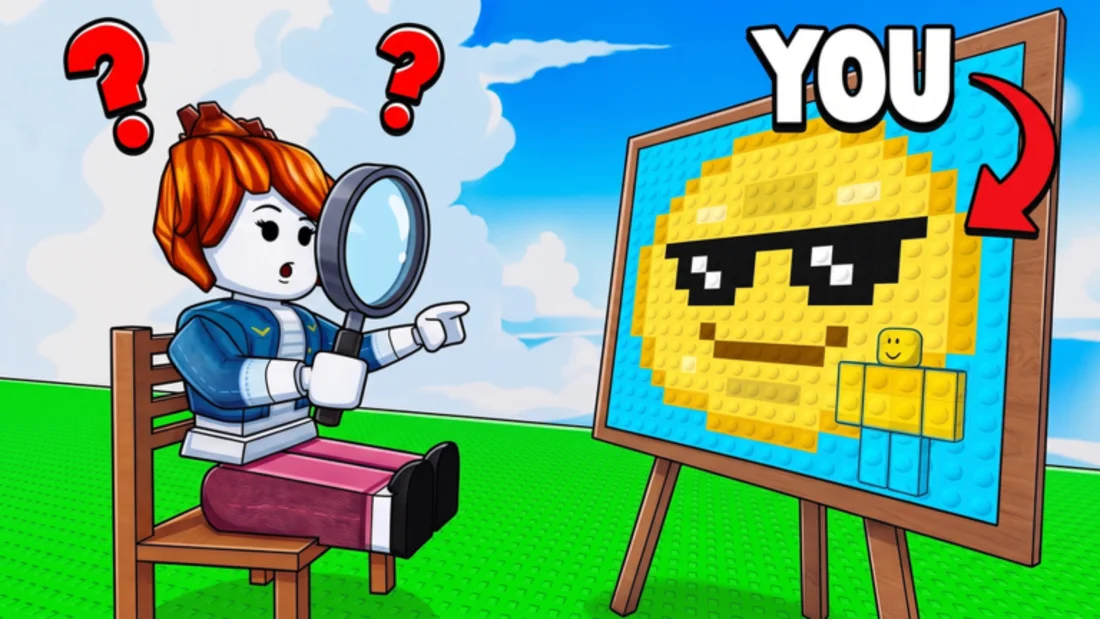
Hide In Pixels names three disruption tools: jumpscares, flash bangs, and screen shakes. They are all aimed at the seeker's attention, and none of them is an attack. A jump scare does not remove the seeker, a flash bang does not blind them permanently, and a screen shake does not move them to another part of the map.
The items differ in how they interrupt. A jumpscare is a startle. A flash bang is a visual break. A screen shake is a stability break. Those are different jobs, which is why treating the three as interchangeable usually produces a wasted item. The table below is the short version; the rest of the page explains the differences.
The exact duration, cooldown, and number of uses are not published in the official description. This page avoids inventing them. The practical notes describe the effect, not a frame count.
| Item | What it interrupts | What it does not do |
|---|---|---|
| Jumpscare | A close inspection or a settled search rhythm | It does not hide a bad outline or move the seeker |
| Flash bang | A visual sweep across a row of shapes | It does not erase the seeker's memory of the area |
| Screen shake | Fine comparison between two similar blocks | It does not work as well in a flat, low-detail area |
The jumpscare is the most theatrical item. Its value comes from the body's reaction to a sudden event: the seeker flinches, loses the line they were following, or takes a second to re-orient. That second is the entire point. If the seeker was already certain about a shape, the flinch does not erase the certainty.
The item is therefore strongest when the seeker is close but still uncertain. It is weakest when they are far away (nothing to startle) or already staring at the hiding spot (nothing left to interrupt). The gap between those states is small, which is why the jumpscare has a reputation for being either perfect or useless.
A useful way to think about it: the jumpscare buys attention, not distance. It does not create space between the player and the seeker. It creates a moment where the seeker's attention has to restart.
The flash bang changes what the seeker can see for a moment. That makes it a route item rather than a startle item. If the seeker is moving through a pattern, the flash can break the pattern; if they are standing still and thinking, the flash may simply give them a reason to restart the sweep.
The item is most useful when the seeker has already chosen a direction. A player who is sweeping left to right has a plan; the flash interrupts the plan. A player who has not chosen a direction has no plan to interrupt, and the flash can make the search more careful rather than less.
Unlike the jumpscare, the flash does not depend on a close-range reaction. It depends on the seeker being in motion. That makes it a better mid-range item and a worse panic button.
The screen shake is the quietest item. It does not startle and it does not blank the view; it makes the view harder to hold steady. That is most disruptive when the seeker is comparing fine details, such as two blocks that are almost the same color.
The item loses value in a flat area. If the painting has a single color and the seeker is checking a clean silhouette, there is not much detail to destabilize. The shake works best in a busy region where the seeker needs a stable view to separate the player from the pattern.
Because it is subtle, the shake is also the easiest item to use without confirming your location. A jumpscare announces that someone is close; a shake can be read as a nuisance. That makes it a reasonable choice when you are unsure whether the seeker has noticed you.
Every item is also information. A jumpscare tells the seeker that the hiding player believes the seeker is close. A flash bang tells them that the player wants to interrupt a route. A screen shake tells them that the player is worried about a detailed comparison. None of those messages includes a location, but all of them narrow the search.
That is why item use has a cost beyond the cooldown. A player who uses an item at the wrong time teaches the seeker where to slow down. A player who waits until the seeker is already committed teaches them nothing they can use.
The counter for the seeker is simple: when an item lands, return to the last shape you were sure about instead of restarting the whole search. The item is designed to make you lose your place; the recovery is to have a place to return to.
The first myth is that the items can save a bad blend. They cannot. A seeker who has already seen the outline does not need a stable view to remember it. The item interrupts attention, not recognition.
The second myth is that using all three items in a row is stronger than using one well. In practice, a chain of items tells the seeker that the player is nearby and out of ideas. It also removes the ability to respond later in the round.
The third myth is that the items are only for the last few seconds. A well-timed mid-round item can be stronger than a panicked late one, because the seeker is still building a route and has more attention to lose. The right window depends on the seeker's behavior, not the clock.
Use a private server and one item per round. Ask the other player to search normally and to say out loud when they notice the item. That gives you a reaction, not just a result. After a few rounds, you will know which item fits your timing and which one you are using too early.
Do not practice all three at once. The effects overlap, and the feedback becomes noise. One item, one round, one observation is slower but much more useful.
Finally, practice the no-item round as well. If your blend and spot are strong enough, the item is a bonus rather than a necessity. That is the state you want before you start relying on disruption.
FAQ
The official description does not publish cooldowns or use counts. This page does not invent them. The practical advice is to treat each item as a limited resource and use it when it can change a decision.
The official description frames the items as tools for trolling the opponent while hiding. The exact rules for the seeker are not published, so this site does not assume the seeker has the same loadout.
The screen shake is the least committal and the easiest to use without confirming your location. The jumpscare is more direct but easier to waste.